





Ah, sushi! Who doesn't love this Japanese delicacy that has conquered the whole world? In addition to being delicious, sushi has a fascinating and curious history. From its mysterious origin to its evolution over the centuries, there are many interesting facts about sushi that enchant us!
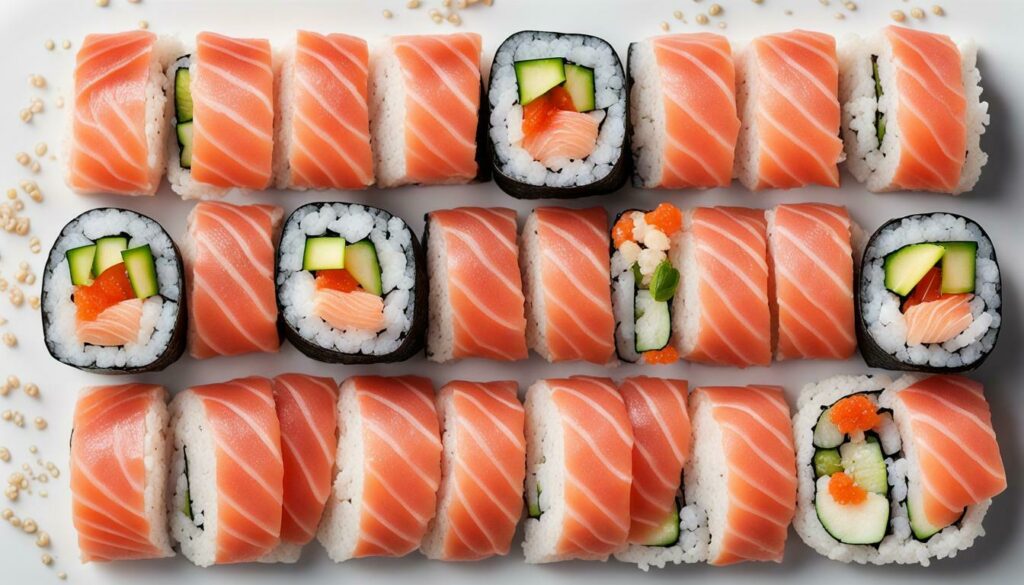
Surprising facts about sushi that delight us!
There is no denying that there is something magical about the process of preparing sushi, whether due to the precision of the fish cuts, the perfect balance of the ingredients or the impeccable presentation of the dish.
And for you who are a fan of sushi, we have prepared a list of surprising facts about the creation of sushi that will delight you even more with the delicacy. Shall we check it out?
Main Conclusions
- Sushi has a mysterious and curious history from its origins to its evolution.
- The process of preparing sushi is a true art, involving precision, balance and impeccable presentation.
- The surprising facts about the creation of sushi enchant us even more with the delicacy.
Mysterious Origin of Sushi
Did you know that the origin of sushi It's a mystery? There are different stories about how this Japanese delicacy came to be, but none of them can be proven with certainty.
Origin in Southeast Asia
One of the most common theories is that sushi was created in Southeast Asia around 2,000 years ago. In this region, people used to preserve fish by wrapping it in fermented rice, which was discarded before consumption. Over time, this technique spread to Japan and was improved, becoming the sushi we know today.
Origin in Japan
Another theory is that sushi was created in Japan, in the 8th century, as a way of preserving fish during a period of food scarcity. The Japanese prepared the fish in rice vinegar and consumed only the fish, discarding the rice. Over time, rice began to be consumed along with fish, and sushi became increasingly popular.
Origin in Buddhist Temples
A third theory suggests that sushi was created by Buddhist monks in Japan, who needed a source of protein in their vegetarian diet. To do this, they began to prepare fish with rice and vinegar and wrap it in bamboo leaves to take to the temples. This technique became popular outside of temples and became sushi as we know it today.
Regardless of its origin, sushi is a delicacy loved around the world. And even if we don't know exactly how it came about, we can enjoy its tasty simplicity and elegance.
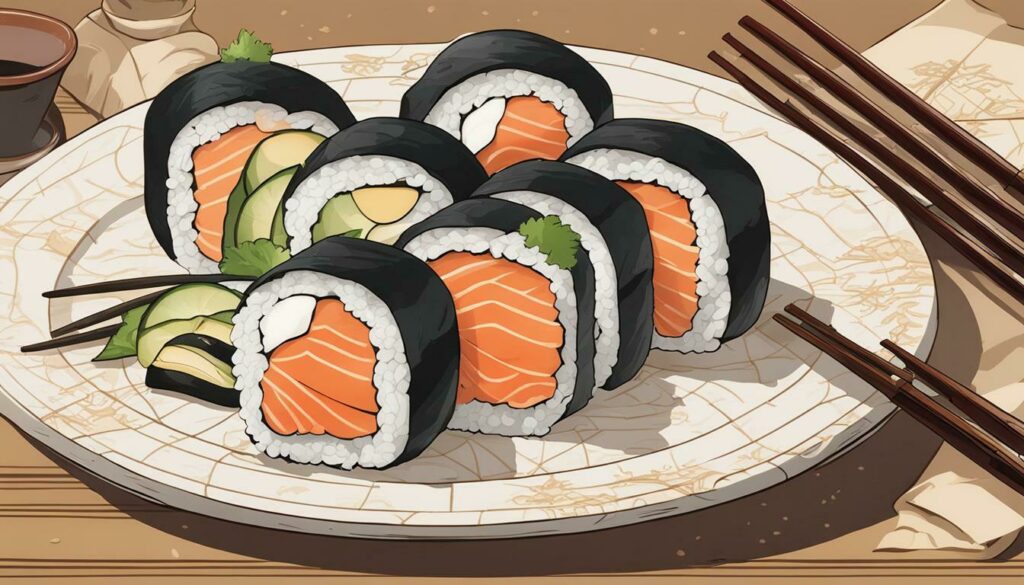
The evolution of sushi
Our journey into the world of sushi does not end at its mysterious origin, on the contrary, now we will explore the evolution of this much-loved dish! After the beginnings of sushi, it developed into two distinct schools: Edo-mae and Kansai.
Edo-mae
The Edo-mae school, which developed in the Tokyo region, is considered the oldest and most traditional creation of sushi. Originally, it was made with local fish, such as tuna and halibut, and was known as nigiri sushi. However, over time, new preparation techniques were introduced, allowing sushi to become more refined and complex.
Kansai
The Kansai school, which developed in the Osaka region, is known for being more “inventive” and uses a greater variety of ingredients. This sushi school is famous for its gunkan-maki, which are the famous rice “boats” with filling on top. In addition, the Kansai school is also famous for the oshi-zushi style, which is made by pressing rice and filling in a special mold.
Both schools of sushi continue to develop and innovate, incorporating new ingredients and preparation techniques. Nowadays, it is possible to find a multitude of sushi variations around the world, from traditional nigiri to modern sushi fusion.
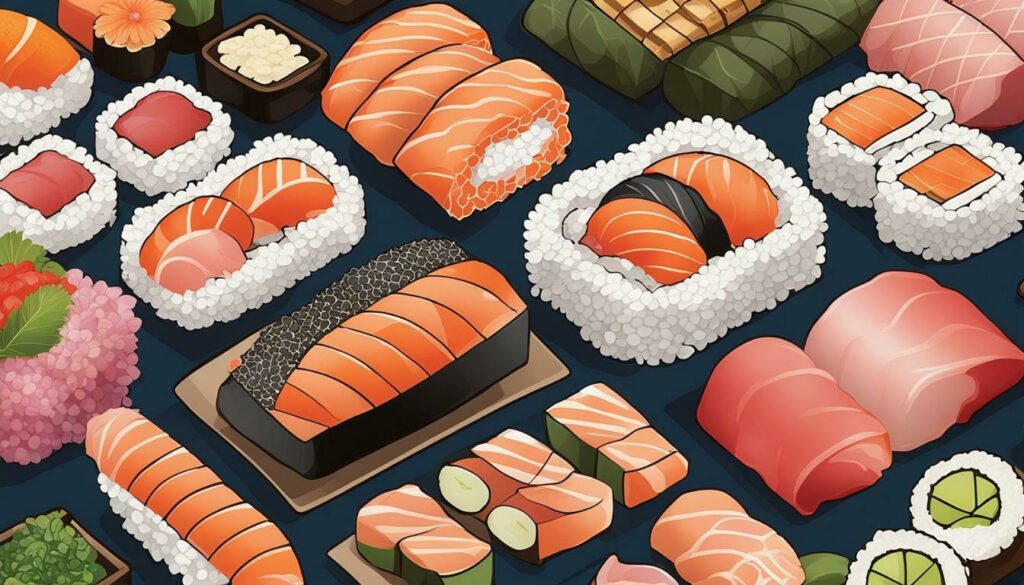
And so we come to the end of the section on the evolution of sushi. But don't worry, we still have lots of curiosities and interesting facts to discover about this fascinating dish! Stay with us and let's continue our sushi journey.
Unusual ingredients in sushi
Our next topic is the ingredients used in the production of sushi. Of course we all know the classics like salmon, tuna and shrimp, but did you know that there are other very curious and different options?
One of the most unusual is quail egg sushi, very common in Japan. That's right, a whole quail egg stuffed inside the sushi! It seems like a strange mixture, but it is a real delicacy for sushi lovers.
Another interesting option is sea urchin sushi. That's right, a whole sea urchin inside sushi. It's not the most popular option, but it has a unique flavor that's worth trying at least once in your life.
And for those who like a spicier touch, the pepper jelly sushi is a great choice. The mixture of sweet rice and spicy jelly is an explosion of unusual flavors.
And of course, we can't forget katsuobushi sushi, a dried and smoked fish that is grated into very fine flakes and used as a seasoning in sushi. It seems unusual, but it is a very common and important ingredient in Japanese cuisine.

Isn't it incredible how human creativity can transform simple ingredients into true culinary works of art? And believe me, these unusual options are just the tip of the iceberg. Who knows what the next ingredient will be to surprise our palates?
Sushi as art
In addition to being a gastronomic delight, sushi is also seen as an art form by the Japanese. The word “sushi” not only refers to the dish itself, but also to the technique used to prepare it, which consists of molding the rice with your hands and combining different ingredients in a harmonious way.
Presentation is another fundamental aspect of sushi as an art. The sushi is carefully arranged on a plate to make it look like true works of art. Sushi chefs spend years training and perfecting their skills to create visually stunning compositions.
In addition, sushi is also used as inspiration in other forms of art, such as paintings, drawings and even miniature sushi sculptures. The art of sushi is so valued that there is even a museum dedicated to it in Tokyo, the “Sushi Museum”.
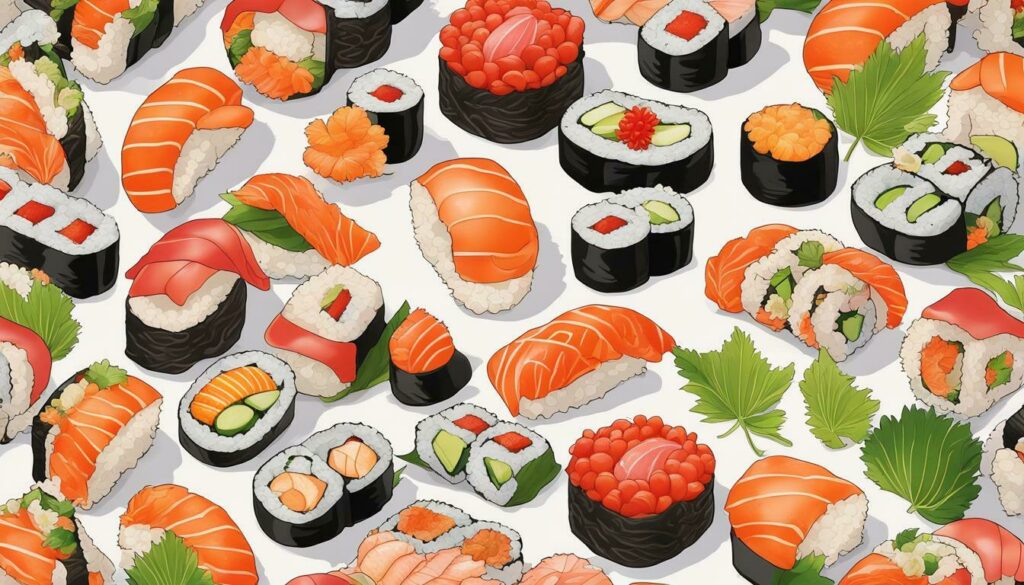
In short, sushi is not only delicious food, but also a true expression of art. With its carefully selected ingredients, unique preparation technique and impeccable presentation, it's easy to understand why sushi is so valued around the world.
Curiosities about sushi
So, are you as enchanted with the world of sushi as we are?
Before we finish, we want to share some more interesting facts about this Japanese delicacy:
- Did you know that sushi can be considered a complete dish, as it contains carbohydrates, proteins, fats, vitamins and minerals?
- It is a great snack or breakfast option that is packed with nutrients and will help satisfy your hunger. Plus, it’s easy to make and can be customized to your liking. wasabi, that little green seasoning that many people put in sushi, is nothing more than a Japanese horseradish root. It helps cleanse impurities from the mouth and is an excellent natural anti-inflammatory.
- Interesting to know that sushi chefs They are considered true artists, as preparing sushi involves a lot of technique and precision. Some places even offer courses for those who want to become a professional sushi chef.
And here's the last curiosity: did you know that there are different types of sushi? Nigiri, which is the most common, is made up of rice and fish. Rolls, on the other hand, have a cylindrical shape with several ingredients mixed and rolled with rice in a seaweed sheet. Temaki, in turn, is a type of cone filled with rice, fish and other ingredients. So, which one do you prefer?

And so we come to the end of another article full of curiosities about Japanese cuisine. We hope we have helped you fall in love with sushi even more.
Conclusion
So, what did you think of these surprising facts about the creation of sushi? We here marvel at the mysterious origins of this famous dish and how it has evolved over the years.
We also cannot fail to highlight the unusual ingredients that can be found in some versions of sushi, showing that creativity has no limits.
And how can we not mention sushi as art? It's impressive to see how Japanese chefs pay attention to every detail when creating these delicate and sophisticated dishes.
We hope you had as much fun as we did discovering these interesting facts about sushi. And now, who wants to go to a Japanese restaurant to try this delicacy?

Paulo Ribeiro, an Information Technology consultant, is passionate about cooking and gastronomy. Her true passion lies in exploring the stories behind the recipes and ingredients. At “Cozinha da Vê”, he shares his culinary discoveries, tested recipes and historical insights, creating a unique journey that combines technology and flavor.